


Welcome to Perspicacity, a newsletter from Kudare about insights & how they're derived. If you haven’t subscribed, please do!
Perspicacity noun /pur-spi-kas-i-tee/
🔮 the quality of having a ready insight into things; shrewdness.
Bonjour, fun fact: je suis bilingue.
In other news, I’m in the midst of running my new Market Intelligence Relay on goodr (they’re not a client and don’t know I’m doing this) for 4 weeks. You can follow along on LinkedIn or peek at the output on the Kudare site.
My calendar is open and bookable if you’ve got work you want to do together this fall.
– Kurt
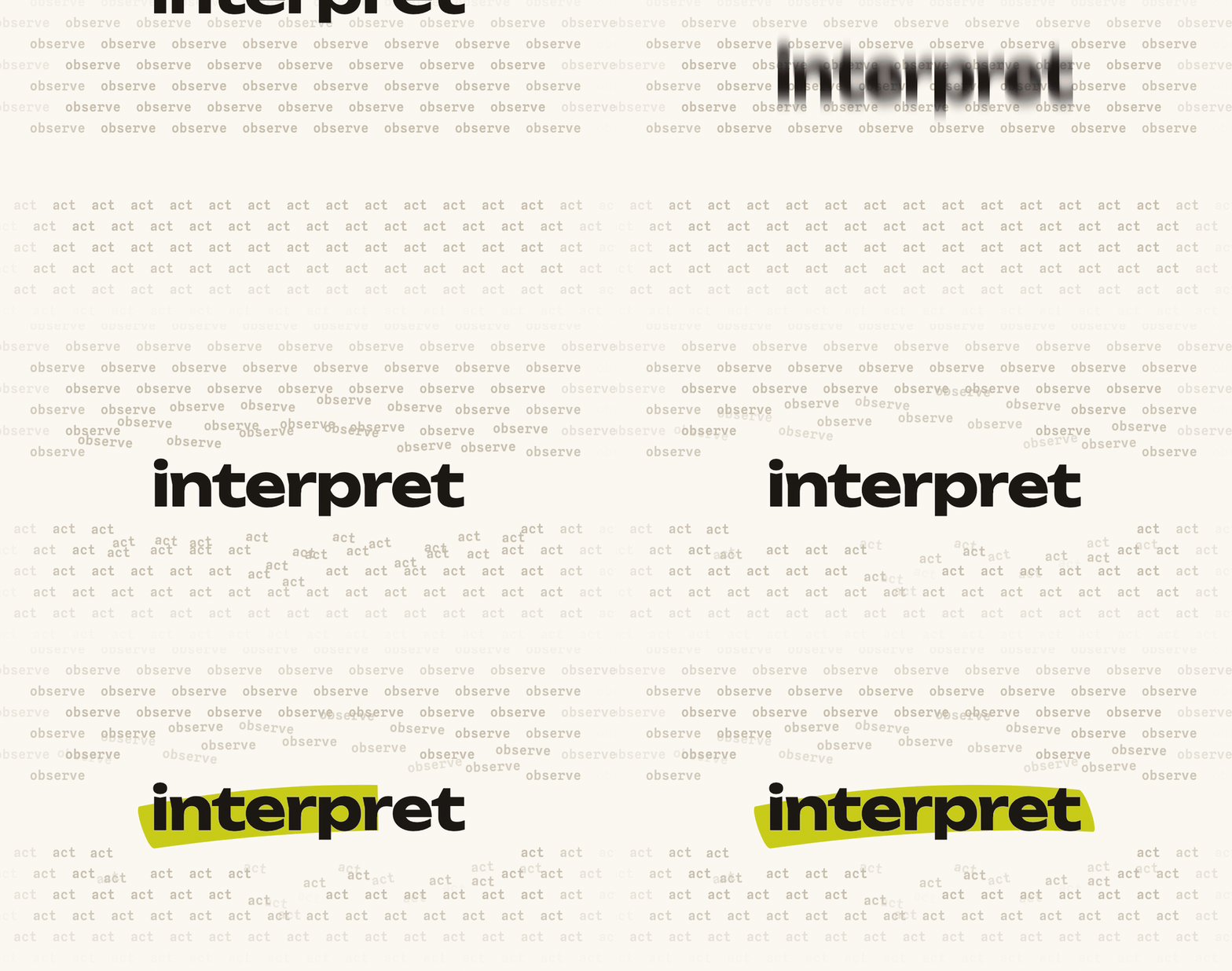
Nothing really breaks if you skip the interpretation, it just falls flat.
An annoyingly discouraging amount of what we do as researchers or strategists never really says what we think.
Not that what we’re producing is wrong. I mean, it’s accurate, probably long, and I’m sure sounds super profesh. The only issue is that there’s no take in there that someone might disagree with. And I get it. We’re afraid to introduce biases or over-editorialize something that’s supposed to be completely objective. But is there really value anymore in work that doesn’t come with some degree of subjectivity from an expert?
IMO, there are a few steps that get us from perceiving reality to affecting reality, and that makes what I’m talking about here sound a lot more metaphysical than it is. I’m just talking about getting something done. In our industry, you need to be able to observe the current reality, interpret the implications of that current reality, and then act on it.
Observe, interpret, act.
OBSERVING is cheap, and it’s getting cheaper. We’ve got dashboards, brand trackers, and now our good buddy Chat, who can read half the internet before I’ve sat down at my desk with a mediocre coffee.
ACTING got cheap too. Programmatic bidding, automated recipes for lifecycle marketing, massive AI-generated ad sets…
And then there’s the middle part (not the one that JTT made famous and gen alpha seems to be bringing back), INTERPRETING. This part never got cheap though, because the market hasn’t figured out how to widgetize it. It doesn’t come with a seat license, there’s no dashboard plugin. You can definitely still buy it, but it’s not part of the ones and zeros in your monthly SaaS subscription.
HODL UP, just to be clear here, a summary doesn’t count as interpreting. A summary is just an observation compressed. Same stuff, maybe a little clearer and succinct, but often still missing the 𝓼𝓸 𝓽𝓱𝓮 𝓮𝓯𝓯 𝓦𝓗𝓐𝓣.
Interpreting is also the only of these three parts where you can be personally, specifically WRONG. Honestly, terrifying.
꩜ Follow the right methodology to collect information? Well done, friend!
꩜ Make something real and put it out in the world? Look at you accomplishing things!
꩜ But ponder for days about what something might mean and what we should do about it, and then share that perspective out loud? Straight to jail. Jk.
You’re NOT going to get in trouble. Tell the class what you think.
I forgot to make space for interpretation this summer.
You know how we’re all trying to get AI to do stuff for us? Well I am too. But it’s taken me a while to get my head around task decomposition, and the purposeful selection of how tasks in a workflow get assigned, especially human vs machine assignments.
Anyhow, I’ve been building a research machine this summer (Market Intelligence Relay). This thing reads more in a morning than I could all week, but then when you ask it to say what any of it means, you get back 14 of the same boring and obvious “insight” delivered confidently in a rule of three or telling you to delve into something or whatever. All 14 weren’t necessarily wrong per se, but they were barely more than nothing.
I’d automated the observing (yay!), then automated a summary of the observing instead of making sure any real interpreting got done. And in the task decomposition, that one should definitely have been mine (oops).
But, don’t worry, I only spent WEEKS tweaking and redesigning the machine over and over to try to get it to do it without me before realizing this. I’m fine. It’s fine. It’s nice to feel needed.
Nothing really broke broke when I (unwillingly) skipped the interpretation, it honestly just fell flat.
But going straight from observing to acting can feel sneakily glorious btw. It’s quick, it looks super decisive. Nobody’s stopping you to ask what you think any of it means, because you’ve got data and you’ve got a plan 🤝
[pretend there’s an epic handshake meme here]
Ya, handing over observations without the interpretation feels quicker, but realistically does NOT save anybody time. Now whoever’s building the dang thing has to decide what it all means, probably on a strict deadline, while already in create mode, and having spent a fraction of the time you did with the data (ie observations).
What do we get? The work that comes out the other end is rushed, or shortsighted, or worse has NO perspective… no soul.
And what happens with work that got no soul? Well, most people probably won’t bother to call it bad. It’ll be competent and on-brief and completely forgettable. Because the reality is that bad work gets flagged and fixed, but meh work just ships and gets forgotten.
Sooooo think deep thoughts! Wonder, hypothesize, ponder, question.. then form a brave enough opinion that it’ll make at least one someone mad.. then say that sh*t with your whole chest!
k but how?
A few tactics you can steal. Sometimes they help, sometimes they don’t.
before anything leaves your desk, find the sentence or paragraph where you took a stance. Then say it to yourself, out loud like a weirdo. If you can’t find it, you know what to do.
change the Key Findings section title to something like What I Think This Means. You’ll think a lot harder about the relevance and impact of what’s in there when you’re clearly taking personal responsibility for it.
try writing the so what BEFORE building the deck. Force yourself to build the story of the report/brief/whatever around the things that matter most, instead of doing the easy (though tedious) thing of just giving a laundry list of every observation you’ve gathered.
send your nuanced perspective to whoever has to act on it before the big formal readout. It can be a few bullets in a slack, it can be a 15-min calendar invite, it can be an informal chat while grabbing a spindrift from the office fridge (why is there only ever lemon left? justice for blood orange tangerine!). Just get their reaction ahead of time, and go into the bigger meeting basing the focus around that pre-established alignment (or disagreement, because that can be just as fruitful).
ok one more, less about making sure that you’re bringing the interpretation and more about making sure that your interpretation is heard and acted on: ask whoever is supposed to make the decision or take the action “what are you going to do differently if this is right?”
G’luck. go tell people what you think. YOUR OPINION MATTERS
If you have a friend or colleague who would find this interesting, please be a pal and share.
– Kurt